English: Milk Purity Test: Can You Check for Water Adulteration at Home?
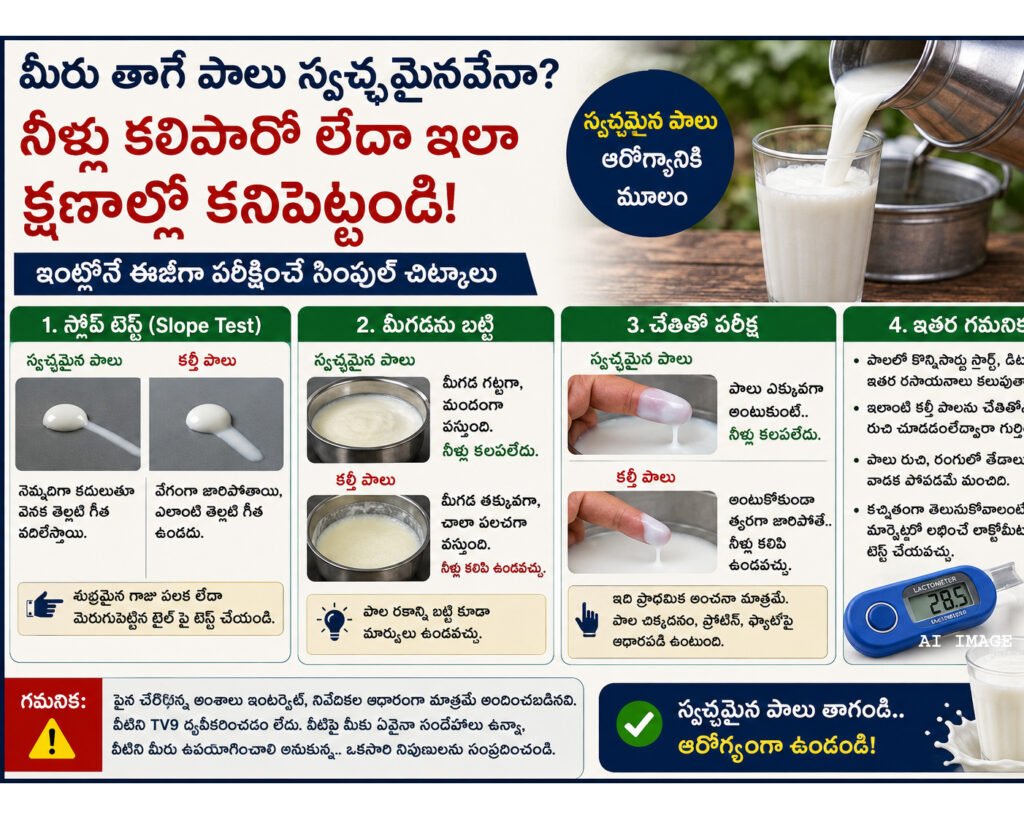
మీరు కొనుగోలు చేసే పాలలో నీళ్లు కలిపారా లేదా తెలుసుకోవాలంటే కొన్ని ఇంటి స్థాయి ప్రాథమిక పరీక్షలు ఉపయోగపడొచ్చు. అయితే పాలు స్వచ్ఛమైనవో, ఇతర పదార్థాలతో కల్తీ చేశారో కచ్చితంగా నిర్ధారించడానికి ఇంటి చిట్కాలపై మాత్రమే ఆధారపడకుండా ల్యాబొరేటరీ పరీక్ష చేయించడం ఉత్తమం.
స్లోప్ టెస్ట్తో ప్రాథమిక అంచనా
మెరుగుపెట్టిన గాజు పలక లేదా టైల్పై ఒక చుక్క పాలు వేసి అది ఎలా కదులుతుందో గమనించే పద్ధతిని కొన్ని చోట్ల సూచిస్తారు. పాలు నెమ్మదిగా కదిలి తెల్లటి గుర్తు వదిలితే చిక్కదనం ఎక్కువగా ఉన్నట్లు, వేగంగా జారిపోతే పలుచగా ఉన్నట్లు అంచనా వేయవచ్చు.
అయితే ఈ పరీక్ష ద్వారా పాలలో నీరు కలిపారనే విషయాన్ని కచ్చితంగా నిర్ధారించలేం. పాలలో సహజంగా ఉండే కొవ్వు, ప్రోటీన్, ఘనపదార్థాల స్థాయిలు కూడా దాని ప్రవాహాన్ని ప్రభావితం చేస్తాయి.
మీగడను పరిశీలించడం
పాలను మరిగించి చల్లార్చిన తర్వాత ఏర్పడే మీగడను గమనించడం ద్వారా కూడా పాల నాణ్యతపై ప్రాథమిక అంచనా వేయవచ్చని చెబుతారు. మందంగా మీగడ ఏర్పడితే పాలలో ఘనపదార్థాలు ఎక్కువగా ఉండొచ్చు. పలుచగా ఉంటే తక్కువ ఘనపదార్థాలు ఉండే అవకాశం ఉంది.
అయితే పాల రకం, కొవ్వు శాతం, ప్రాసెసింగ్ విధానం వంటి అంశాల వల్ల కూడా మీగడ పరిమాణం మారుతుంది. కాబట్టి మీగడ మందాన్ని మాత్రమే ఆధారంగా చేసుకుని పాలు కల్తీ అని నిర్ణయించకూడదు.
చేతితో పరీక్షించడం ఎంతవరకు నమ్మదగినది?
వేలికి పాలు ఎంతవరకు అంటుకుంటున్నాయో గమనించడం ద్వారా నీరు కలిపారో లేదో తెలుసుకోవచ్చని కొన్ని ఆన్లైన్ చిట్కాలు చెబుతున్నాయి. కానీ ఇది శాస్త్రీయంగా ఖచ్చితమైన పరీక్ష కాదు. పాల చిక్కదనం దాని కొవ్వు, ప్రోటీన్, ఇతర ఘనపదార్థాలపై ఆధారపడి ఉంటుంది.
అందువల్ల ఈ పద్ధతిని కేవలం ఒక సాధారణ పరిశీలనగా మాత్రమే పరిగణించాలి.
నీటితో పాటు ఇతర కల్తీలు ఉంటే?
పాలలో నీటితో పాటు స్టార్చ్, డిటర్జెంట్లు లేదా ఇతర అనుచిత పదార్థాలు కలిపితే వాటిని కేవలం రంగు, వాసన, రుచి లేదా చేతితో తాకడం ద్వారా గుర్తించడం సాధ్యం కాకపోవచ్చు.
పాల రుచి, వాసన లేదా రూపంలో అసాధారణ మార్పులు కనిపిస్తే వాటిని ఉపయోగించకుండా సంబంధిత ఆహార భద్రతా అధికారులకు ఫిర్యాదు చేయడం మంచిది. పాలలో నీటి కల్తీని కూడా ఇంటి చిట్కాలతో కచ్చితంగా నిర్ధారించలేం. అవసరమైతే నిపుణుల లేదా గుర్తింపు పొందిన ప్రయోగశాల సహాయం తీసుకోవాలి.
లాక్టోమీటర్తో పరీక్ష
పాల సాంద్రతను అంచనా వేయడానికి లాక్టోమీటర్ను ఉపయోగిస్తారు. అయితే లాక్టోమీటర్ రీడింగ్ ఒక్కటే పాలలో అన్ని రకాల కల్తీలను నిర్ధారించదు. కాబట్టి కచ్చితమైన నాణ్యత పరీక్ష కోసం ప్రమాణిత ప్రయోగశాల పరీక్షే నమ్మదగిన మార్గం.
Milk adulteration is a food-safety concern, and some simple home observations can provide only a preliminary indication of changes in milk consistency. Tests such as observing how a drop moves on a smooth surface or checking the cream layer after boiling may show differences in thickness, but they cannot conclusively establish that water has been added.
Milk consistency can naturally vary depending on fat, protein and solids content, as well as the type and processing of milk. Therefore, a rapid home test should not be treated as a definitive purity test.
What about other adulterants?
Water is not the only possible adulterant. Unwanted substances such as starch or detergents cannot reliably be identified through touch, taste or appearance alone. If milk has an unusual smell, taste or appearance, it is safer not to consume it and to seek advice from the appropriate food-safety authorities.
A lactometer can be used to assess milk density, but its reading alone cannot identify every form of adulteration. For a conclusive assessment of milk quality or adulteration, laboratory testing is the more reliable option.