English: Monsoon Food Safety: How to Reheat Leftover Food Safely
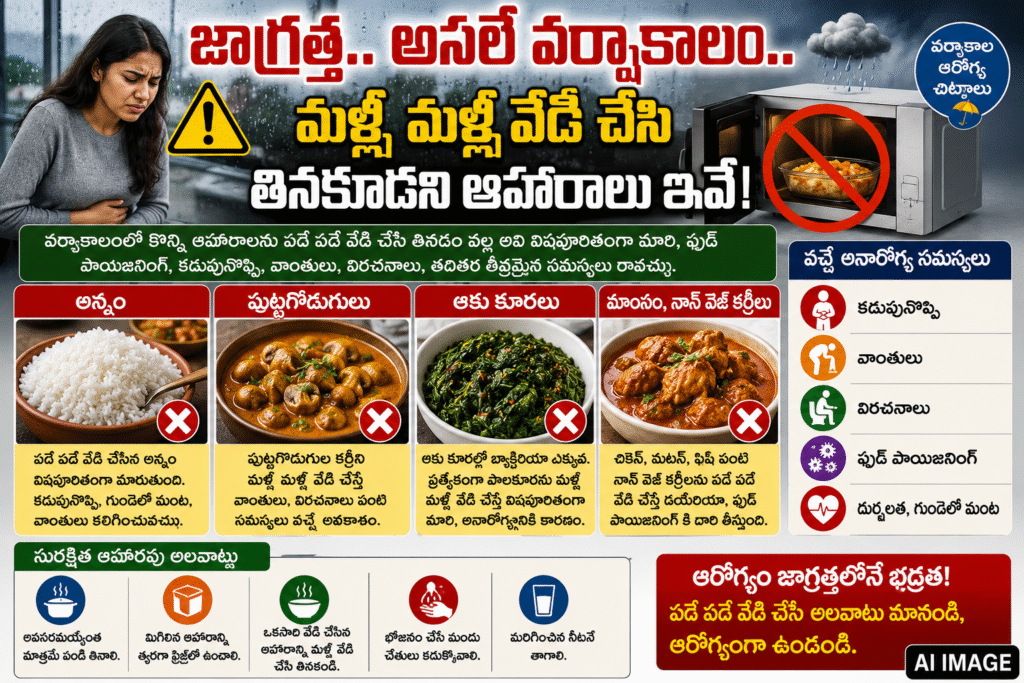
వర్షాకాలంలో ఆహారాన్ని సురక్షితంగా నిల్వ చేయడం మరింత ముఖ్యం. ముఖ్యంగా మిగిలిపోయిన ఆహారాన్ని సరిగ్గా చల్లబరచకుండా లేదా ఎక్కువసేపు బయట ఉంచి మళ్లీ వేడి చేసి తినడం వల్ల ఫుడ్ పాయిజనింగ్ ప్రమాదం పెరగొచ్చు. అయితే “మళ్లీ వేడి చేస్తే ఆహారం విషపూరితం అవుతుంది” అనేది అన్ని ఆహారాలకు వర్తించే సాధారణ నియమం కాదు.
వర్షాకాలంలో జాగ్రత్త.. ఈ ఆహారాలను పదే పదే వేడి చేయొద్దు
వర్షాకాలంలో తేమ, ఉష్ణోగ్రతల మార్పుల కారణంగా ఆహారాన్ని సురక్షితంగా నిల్వ చేయడం కీలకం. వండిన ఆహారాన్ని ఎక్కువసేపు గది ఉష్ణోగ్రత వద్ద ఉంచడం, చల్లార్చి మళ్లీ మళ్లీ వేడి చేయడం వల్ల బ్యాక్టీరియా పెరిగే అవకాశం ఉంటుంది. ముఖ్యంగా అన్నం వంటి పిండి పదార్థాలు, మాంసం, పుట్టగొడుగులు, ఆకు కూరలను నిల్వ చేసే విషయంలో అదనపు జాగ్రత్త అవసరం.
అన్నం
మిగిలిపోయిన అన్నాన్ని గది ఉష్ణోగ్రత వద్ద ఎక్కువసేపు ఉంచడం సురక్షితం కాదు. Bacillus cereus అనే బ్యాక్టీరియా వల్ల ఆహార విషబాధ సంభవించే అవకాశం ఉంటుంది. వండిన అన్నాన్ని త్వరగా చల్లబరిచి రిఫ్రిజిరేటర్లో ఉంచాలి. తినేటప్పుడు బాగా వేడి చేసి, ఒకసారి మాత్రమే అవసరమైనంత పరిమాణాన్ని తీసుకోవడం మంచిది.
అన్నాన్ని పదేపదే వేడి చేయడం వల్ల అది తప్పనిసరిగా “విషపూరితం” అవుతుందనడం కంటే, సరిగ్గా నిల్వ చేయకపోవడమే ప్రధాన ప్రమాదం.
పుట్టగొడుగులు
పుట్టగొడుగులతో చేసిన వంటకాలను కూడా వండిన తర్వాత ఎక్కువసేపు బయట ఉంచకుండా త్వరగా చల్లబరచి రిఫ్రిజిరేటర్లో పెట్టాలి. నిల్వ చేసిన ఆహారాన్ని తగిన ఉష్ణోగ్రతకు మళ్లీ వేడి చేసి తీసుకోవాలి. పాడైన లేదా ఎక్కువసేపు బయట ఉన్న పుట్టగొడుగుల వంటకాలను మాత్రం మళ్లీ వేడి చేసి తినకూడదు.
ఆకు కూరలు
పాలకూర వంటి ఆకు కూరలను వర్షాకాలంలో శుభ్రంగా కడిగి, సరిగ్గా ఉడికించి తీసుకోవాలి. వండిన కూరను ఎక్కువసేపు గది ఉష్ణోగ్రత వద్ద ఉంచకుండా రిఫ్రిజిరేటర్లో భద్రపరచడం మంచిది. ఆకు కూరలను మళ్లీ వేడి చేయడం వల్ల అవి తప్పనిసరిగా విషపూరితం అవుతాయనే వాదనకు బలమైన ఆధారాలు లేవు. ఆహార భద్రతలో నిల్వ చేసే విధానం, సమయం ముఖ్యమైన అంశాలు.
చికెన్, మటన్, చేపలు
చికెన్, మటన్, చేపలు వంటి మాంసాహార వంటకాల్లో బ్యాక్టీరియా పెరుగుదలను నివారించడానికి సరైన నిల్వ, ఉష్ణోగ్రత చాలా ముఖ్యం. వండిన మాంసాహారాన్ని రెండు గంటలకుపైగా గది ఉష్ణోగ్రత వద్ద ఉంచకుండా త్వరగా రిఫ్రిజిరేటర్లో పెట్టాలి. తినే ముందు బాగా వేడి చేయాలి.
మళ్లీ మళ్లీ వేడి చేయడం కంటే అవసరమైనంత మాత్రమే బయటకు తీసి వేడి చేసుకోవడం సురక్షితమైన పద్ధతి. వాసన, రంగు లేదా రుచి మారిన ఆహారాన్ని మాత్రం తినకపోవడమే మంచిది.
ఆహారాన్ని సురక్షితంగా ఉంచాలంటే..
- వండిన ఆహారాన్ని ఎక్కువసేపు బయట ఉంచకండి.
- మిగిలిన ఆహారాన్ని వీలైనంత త్వరగా చల్లబరచి రిఫ్రిజిరేటర్లో పెట్టండి.
- ఒకేసారి మొత్తం ఆహారాన్ని పదేపదే వేడి చేయకుండా అవసరమైనంత మాత్రమే వేడి చేసుకోండి.
- అన్నం, మాంసం వంటి ఆహారాలను ప్రత్యేకంగా జాగ్రత్తగా నిల్వ చేయండి.
- పాడైనట్లు అనిపించే ఆహారాన్ని మళ్లీ వేడి చేసి తినకండి.
- వంటకు ముందు, తర్వాత చేతులు మరియు వంటగది ఉపరితరాలను శుభ్రంగా ఉంచండి.
Monsoon Food Safety: Foods You Should Not Reheat Carelessly
During the monsoon, proper storage and handling of cooked food become especially important. Leaving cooked food at room temperature for too long and repeatedly reheating it can increase the risk of foodborne illness.
Rice
Cooked rice can become a food-safety concern if it is left at room temperature for extended periods. Bacillus cereus can multiply in improperly stored rice and may cause food poisoning.
The key issue is not that reheating automatically makes rice toxic. Instead, rice should be cooled quickly, refrigerated properly and reheated thoroughly before eating.
Mushrooms
Cooked mushroom dishes should also be stored properly and refrigerated promptly if they are not going to be eaten immediately. When reheating, only the required portion should be heated thoroughly. Food that has been improperly stored or shows signs of spoilage should be discarded rather than reheated.
Leafy vegetables
Leafy greens such as spinach should be washed properly and cooked thoroughly. Leftover leafy-vegetable dishes should not be left at room temperature for long periods and should be refrigerated appropriately.
There is no general rule that repeatedly reheating leafy vegetables automatically makes them poisonous. Proper storage and temperature control are more important food-safety factors.
Meat, chicken and fish
Cooked chicken, mutton and fish can support bacterial growth if they are improperly stored. Leftovers should be refrigerated promptly rather than being left at room temperature for extended periods.
Instead of repeatedly reheating the entire dish, it is safer to remove only the portion required and heat it thoroughly before eating. Food that has developed an unusual smell, appearance or taste should be discarded.
Simple food-safety tips
Proper refrigeration, hygienic handling and thorough reheating are more important than simply avoiding reheating altogether. During the monsoon, extra care should be taken with cooked rice, meat, fish and other perishable foods.