English News Headline
Telangana ACB Cases: How Many Accused Are Actually Convicted?
Full Telugu News Article
తెలంగాణలో అవినీతి నిరోధక శాఖ (ఏసీబీ) లంచం తీసుకుంటున్న ప్రభుత్వ ఉద్యోగులను పట్టుకుంటున్నప్పటికీ, న్యాయస్థానాల్లో వారికి శిక్షలు పడే వరకు అనేక సవాళ్లు ఎదురవుతున్నాయి. దర్యాప్తు, సాక్ష్యాధారాల సేకరణ, ఛార్జ్షీట్ దాఖలు, కోర్టుల్లో విచారణ జాప్యం వంటి అంశాలు కేసుల పరిష్కారాన్ని ప్రభావితం చేస్తున్నాయి. అయితే ఏసీబీ కేసుల్లో వాస్తవంగా ఎంతమందికి శిక్షలు పడుతున్నాయో తెలుసుకోవాలంటే తాజా అధికారిక గణాంకాలను పరిశీలించాలి.
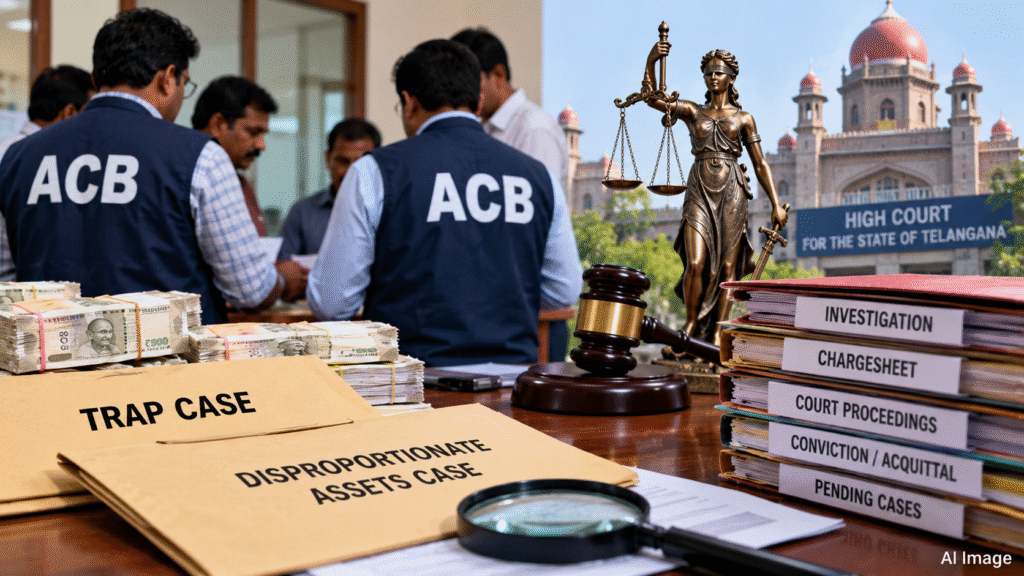
ఏసీబీ ప్రధానంగా రెండు రకాల కేసులను నమోదు చేస్తుంది. మొదటివి ట్రాప్ కేసులు. ప్రభుత్వ అధికారులు లేదా సిబ్బంది లంచం తీసుకుంటున్నట్లు ఫిర్యాదు అందినప్పుడు, చట్టబద్ధమైన విధానంలో ఆధారాలు సేకరించి వారిని పట్టుకునేందుకు అధికారులు చర్యలు చేపడతారు. ఇలాంటి కేసుల్లో లంచం డిమాండ్, స్వీకరణకు సంబంధించిన ఆధారాలు కీలకంగా ఉంటాయి.
రెండో రకం ఆదాయానికి మించిన ఆస్తుల కేసులు. ఇందులో సంబంధిత అధికారి చట్టబద్ధమైన ఆదాయం, ఆస్తుల విలువ, ఖర్చులు, ఆస్తుల సముపార్జనకు సంబంధించిన వివరాలను పరిశీలిస్తారు. అక్రమంగా ఆస్తులు కూడబెట్టినట్లు ఆరోపణలు వచ్చినప్పుడు వాటికి సంబంధించిన ఆధారాలను సేకరించి దర్యాప్తు నిర్వహిస్తారు.
కేసు నమోదు చేయడం ఒక దశ మాత్రమే. న్యాయస్థానంలో నేరాన్ని నిరూపించేందుకు సరైన సాక్ష్యాలు, పత్రాలు, సాక్షుల వాంగ్మూలాలు, అవసరమైన ఫోరెన్సిక్ నివేదికలు సమర్పించాల్సి ఉంటుంది. దర్యాప్తులో లోపాలు లేదా సాక్ష్యాధారాల కొరత ఉంటే కేసు ఫలితంపై ప్రభావం పడవచ్చు.
కోర్టుల్లో కేసులు పెండింగ్లో ఉండటం, సాక్షులు విచారణకు హాజరుకాకపోవడం, న్యాయప్రక్రియలో జాప్యం వంటి అంశాలు కూడా కేసుల పరిష్కారాన్ని ఆలస్యం చేయవచ్చు. అయితే ప్రతి కేసులో జాప్యానికి ఒకే కారణం ఉండదు. నిందితుడిపై నేరం నిరూపించలేకపోవడం, సాక్ష్యాలు సరిపోకపోవడం వంటి కారణాలతోనూ నిర్దోషిగా విడుదలయ్యే అవకాశం ఉంటుంది.
ఏసీబీ కేసుల్లో శిక్షల శాతాన్ని తెలుసుకోవాలంటే నమోదైన కేసులు, విచారణ పూర్తయిన కేసులు, శిక్షలు పడిన కేసులు, నిర్దోషులుగా విడుదలైన కేసుల గణాంకాలను వేర్వేరుగా పరిశీలించాలి. కేసు పెండింగ్లో ఉండటం నిందితుడు దోషి అని నిరూపించదు. అలాగే తిరిగి విధుల్లో చేరినంత మాత్రాన క్రిమినల్ కేసు ముగిసినట్లు కాదు.
అందువల్ల తెలంగాణలో ఏసీబీ కేసుల్లో శిక్షల శాతంపై స్పష్టమైన నిర్ధారణకు రావాలంటే సంబంధిత శాఖ తాజా వార్షిక నివేదికలు, కోర్టుల రికార్డులు, అధికారిక గణాంకాలు అవసరం. నిర్ధారిత సమాచారం లేకుండా శిక్షల శాతాన్ని పేర్కొనడం సరికాదు.
Full English News Article
The Anti-Corruption Bureau (ACB) in Telangana plays a key role in detecting bribery and investigating corruption allegations against public servants. However, securing convictions in court can involve several challenges, including evidence collection, investigation quality, witness testimony and delays in judicial proceedings.
The ACB primarily handles two broad categories of cases. The first involves trap operations, in which officials allegedly accepting bribes are caught through a legally conducted operation. Evidence relating to the demand and acceptance of a bribe is crucial in establishing such cases.
The second category involves disproportionate assets cases. Investigators examine a public servant’s lawful income, assets, expenditure and the sources used to acquire property. These investigations can require detailed financial scrutiny and documentary evidence.
Registering a case is only the beginning of the legal process. To secure a conviction, investigators must present sufficient admissible evidence before the court. Witness statements, official records, financial documents and forensic reports may all play an important role.
Delays in trials, witnesses failing to appear and shortcomings in evidence can affect the progress and outcome of cases. However, the reasons vary from case to case. An accused person may also be acquitted if the prosecution fails to establish the charges beyond reasonable doubt.
To determine the actual conviction rate in Telangana ACB cases, it is necessary to examine official statistics on registered cases, completed trials, convictions and acquittals separately. Pending cases should not be treated as proven offences, and reinstatement in government service does not automatically mean that a criminal case has concluded.
A reliable assessment of conviction rates therefore requires the latest official ACB reports and court records. Without verified figures, stating a specific conviction percentage would be misleading.